Terra is a powerful independent film directed by Rory Wilson, offering a raw and unforgettable portrayal of the human cost of war.
By: Sanj Saigal

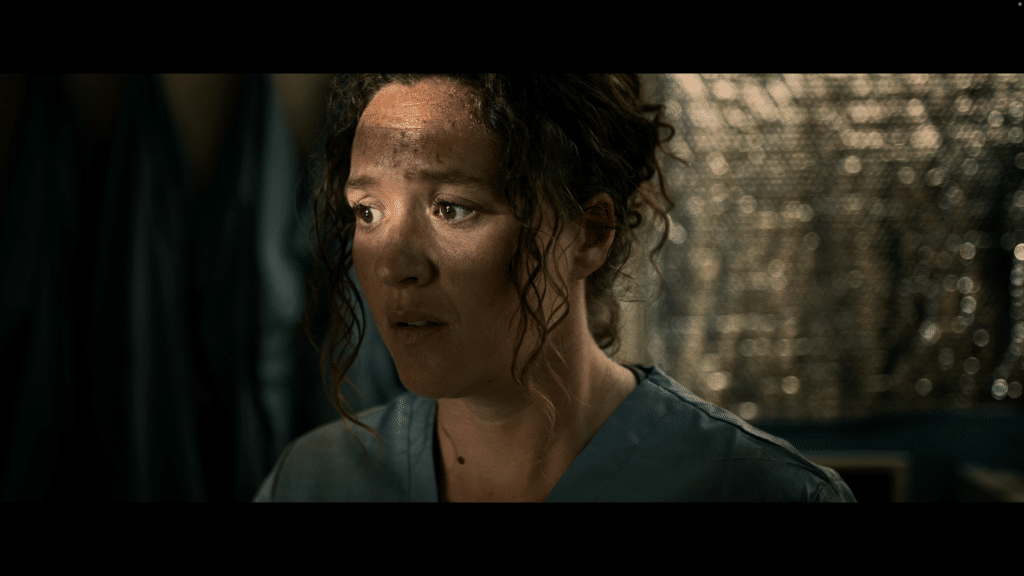
Independent filmmaking has come a long way in recent years, shaking off the old prejudices that used to haunt low-budget cinema. With Terra, Rory Wilson proves that no blockbuster budget is needed to deliver a gripping, emotionally charged experience. From its very first moments, the film refuses to pull its punches—the opening sequence is not for the faint-hearted, immediately immersing the viewer in a world brimming with danger and authentic emotion.
Terra’s cinematography is nothing short of stunning. Every frame is loaded with atmosphere, capturing a constant sense of fear and suspense. It’s impossible not to be drawn in, always eager (and sometimes anxious) to see what will happen next. Meg Birley turns in a standout performance—her silent, expressive glances speak volumes, inviting the audience to share in the characters’ turmoil without a word being spoken.
Terra – The Story
The story is set in a war zone, where a dedicated doctor and his resilient team are forced underground to run a makeshift hospital. Just as they begin to adapt to their grim reality, a desperate father, Dabir (Ramin Farahani), arrives with his daughter, determined to do whatever it takes to secure help and a chance at escape. Their plight becomes the film’s emotional core.
Terra will make its premiere at the prestigious Oscar- and BAFTA-qualifying Raindance Film Festival this June at Vue Piccadilly in London, having already scooped up nominations for Best Performance, Best UK Feature, Best UK Director, and Best Cinematography. These accolades are well deserved.
I had the privilege of a private screening, and the strength of the story was so captivating that I abandoned my phone for the big screen—a rare move, but entirely justified.
Emotional Ride
Wilson’s direction drops us straight into chaos, never letting us forget the stakes. The grim, almost dystopian world pulls you into an emotional ride, where hope is scarce and survival is uncertain. The chemistry between Ramin Farahani and newcomer Runya Ghani (as Dabir’s daughter) is magnetic, giving the film a powerful, character-driven focus. Rather than relying on spectacle, Terra finds its soul in the intimate moments between its leads—a choice that pays off in spades.
Tension is ever-present, with constant threats looming over the central characters. The musical score amplifies the anxiety and keeps the pace taut, though it occasionally threatens to overwhelm quieter scenes. The film doesn’t shy away from the graphic realities of war—injuries and suffering are shown with unflinching honesty, making it a tough watch at times but all the more unforgettable for its authenticity.
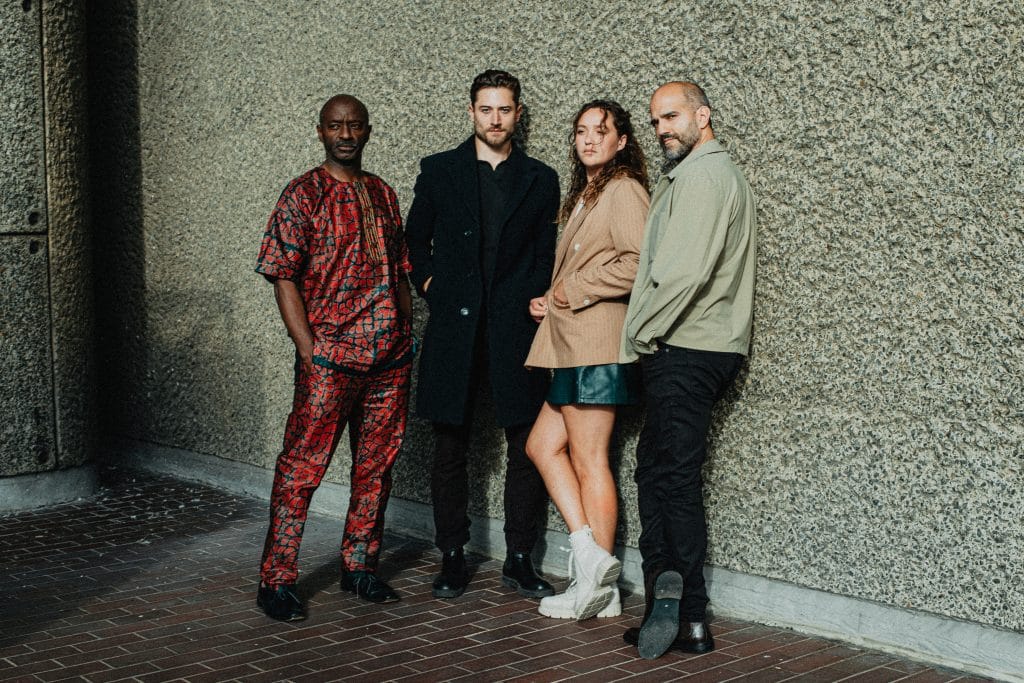
Terra – Narrative Focussed
Terra’s pacing can be uneven—some characters could use more development, and the final act slows after a frenetic opening. Yet, the tight runtime keeps the narrative focused, and once the action ramps up, you’ll find yourself glued to the screen until the pulse-pounding finale.
What’s most impressive is the film’s ability to make the most of its limited resources. By confining much of the action to a single location, Wilson maintains a claustrophobic intensity that reinforces the story’s themes. His use of extreme close-ups brings us face to face with fear, isolation, and the brutality of conflict.
Human Stories
There are moments when character backstory feels a bit forced, and the father-child dynamic might seem familiar from other films. Still, the performances and emotional honesty elevate Terra above mere genre fare. At its heart, this is a story about empathy—fathers risking everything for their children, doctors doing their best in impossible circumstances, and ordinary people caught in the crossfire. The conclusion is emotionally overwhelming, tying up narrative threads with a sense of closure while leaving you pondering what the future holds for these characters.
In short, Terra is an unforgettable depiction of the horrors of war, offering a colossal helping of empathy for both the healers and the helpless. The lead performances, especially from Farahani and Ghani, are outstanding, and the supporting cast is equally strong. Wilson’s vision is raw and uncompromising, never losing sight of the human stories at its core. If you’re looking for a film that will move you, challenge you, and stay with you long after the credits roll, Terra is one not to miss.
Terra is a gripping independent film directed by Rory Wilson, set in a war zone and featuring standout performances from Ramin Farahani and Meg Birley. Premiering at the Raindance Film Festival, Terra delivers an unflinching look at survival, empathy, and the human spirit.
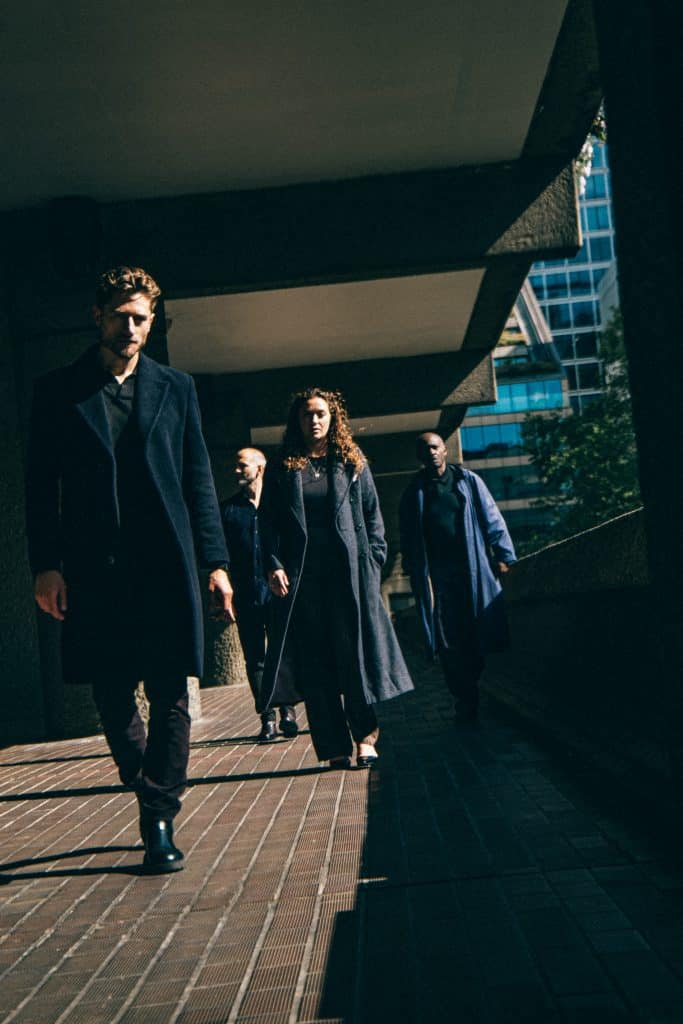
Terra – Rory Wilson
What draws you to telling stories about people facing tough moral choices? I’ve always been fascinated by those moral dilemma riddles, the classic railroad tracks etc, they can be so revealing, about thought processes and how people make decisions. Within a narrative context, these moments of moral dilemma hold the most revelation in terms of character and understanding who somebody is and what they are capable of. With a tough moral choice, there is a moment of decision where all options are considered, no matter how immoral, and in that moment is a beautiful ambiguity of character, a faustian moment where all outcomes exist just by the fact they are being considered. Perhaps underneath it all I believe we are all capable of much more than we think, both good and bad. In TERRA, the circumstances are extreme and several characters are faced with crossing their own moral line.
Self-taught Filmmaker
As a self-taught filmmaker, what’s been your biggest creative breakthrough so far? Most nominated film at Raindance! Honestly, the creative breakthrough/achievement I’m most proud of is that TERRA is exactly the film I set out to make. Despite the limitations, I went big and somehow it didn’t all fall apart. There are cracks, held together very tenuously, but it’s a finished film. I’m extremely proud of the performances in the film and what the cast brought to the story despite the unconventional production. We’ve had an amazing buzz around the project and we are looking forward to handing the film over to audiences. The aim is to get worldwide distribution, that will be the big breakthrough.
First Feature Film
Terra is your first feature film—what inspired the story, and was there a moment you knew you had to make it? I started to develop a fascination for war doctors who in my eyes are the true super heroes of the world. Dr David Nott is a particular hero of mine, he wrote a book called War Doctor. The intense decision making under pressure, the hippocratic oath, the Geneva convention, these strong moral codes, a shining light of goodness in the most extreme of circumstances. I spent a few years working on Film & TV sets working in various departments, eventually as an AD. On every set I was always drawn to the set medics, many of which had experience as combat medics. Some of the stories were breathtaking. The best and worst of humanity. The stories of decision making, treating “assailants” in the same space as innocent civilians.
Script
One second-hand story stood out, about a civilian who, out of desperation, held a doctor at gunpoint, demanding to be helped. I started to piece together a script, and continued to dive into books, documentaries and current affairs. ‘In the Wars’ was another immense read by Dr Waheed Arian. I had the makings of a script but wasn’t entirely sure where it was heading or if in fact I was the right person to be making this film. This thought was not lost on me. And then I met Rukar Ghani through my work with a sports charity. Rukar is from Northern Iraq and was telling me some stories from his youth growing up around unrest and warfare. I gently mentioned I was writing something about war doctors and outlined the story. His face changed and he stopped me.”Rory, can I tell you my story.” My heart stopped. Rukar went on to tell me a story about a rundown hospital and a civilian taking up arms out of desperation to be helped by the doctor. Rukar and his family were at the hospital at the time, held at gunpoint. I remember the way Rukar described the man holding the gun, “as if he had never held a gun before, so unconvincing, which made it all the more dangerous, just a normal guy, just desperate.”
Writing & Directing
You wear a lot of hats—writing, directing, shooting, and editing your own films. How does that hands-on approach shape your process? Honestly, I cannot wait for the day when I have a team of collaborators and the process isn’t quite so lonely, but thus far this has been my modus operandi, very very hands on, right in the action. Particularly when it comes to shooting my work myself, it creates an immediacy to the filmmaking process, an intimacy with the actors, their performances and importantly the way those performances are being captured. I absolutely love it, camera on my shoulder, moving through a scene with the characters, catching moments, holding in a suspended moment, gently directing mid-take. This intimacy with the footage carries right through to the edit, I know exactly which moment of which was the best because I was right there when it happened. I know there’s a 15-second moment of transcendental acting from Meg Birley or Ramin Farahani buried in a take that was riddled with technical faults and mostly unusable, bar that glorious moment.
Authenticity
What’s it like making a movie with minimal resources and a local cast—does it add to the authenticity you’re after? The authenticity was a major priority and I was led as much as possible by Rukar Ghani who was our Kurdish consultant, supported with the script and was on-set every day. He was an incredible sounding board, sharing photos and stories from his youth, supporting with reference images for the production design. It was Rukar’s involvement that gave me the grounding to bring the story to life. All that said, this is a proper independent production with a budget smaller than the coffee tab of a major production. My job is to make a virtue of necessity, to make every choice feel deliberate, even though it may have been the only choice available to me!
Process
Writing in the knowledge that I’ll be shooting, I’m making choices very early in the process to avoid being backed into a corner. I knew where I was going to shoot the film as I was writing it so I knew where to stage certain scenes and how the geography of the ‘hospital’ corresponded to the story. But it’s pretty chaotic. I am very grateful to my cast who put a lot of trust in me. The script was vast and there was a fairly big story to try and tell, and slowly I drip-fed just how small this production was going to be…I’ll try to paint a picture – Camera on my shoulder, 25 SAs, totally outnumbering our 4+ crew. The scene is blocked, we are placing the SAs, trying to maximise their screen presence, we want it to feel like 60, I could only afford 25.
Production
My phone rings, an inbound actor for a scene that afternoon is delayed, train issues…I make a call to the taxi I had booked for pick-up. Cancel. Re-book for later pick-up. Hopefully the train isn’t cancelled. I’m already making plans to lose that actor and shoot something else. Camera still on shoulder. Actors are ready to go. ‘Phone rings again. Another cast member due-in any minute, involved in the next scene, is stuck at a train station nearby. Their taxi didn’t show up. It’s a small remote station. No local taxis. I’m going to have to send Finn, my co-producer and production foot-soldier. Losing a crew member is not what I need, especially not Finn who is keeping this set from crumbling…applying make-up to the SAs, clapper board, blocking SAs, shepherding and corralling. But off he goes, yikes. We are also dangerously close to lunch and I need to wrap this scene before we break. Okay! Camera ready, and ACTION!
Your short films have been recognised by the BFI and you have been selected for both BFI and Warner Bros. Discover Emerging Directors Programmes, how have those experiences influenced the way you approach filmmaking now? I’m very conscious of being a ‘Rogue Filmmaker’, because ultimately I am trying to build a career and increase the scale of my productions, so being part of the BFI and Warner Bros programmes has helped to anchor me into the industry and to understand how productions operate at scale. I want to be part of the industry, be a “professional director”, build a team of collaborators, make impactful big-screen films and add to culture, but there will always be a rogue spirit to my filmmaking.
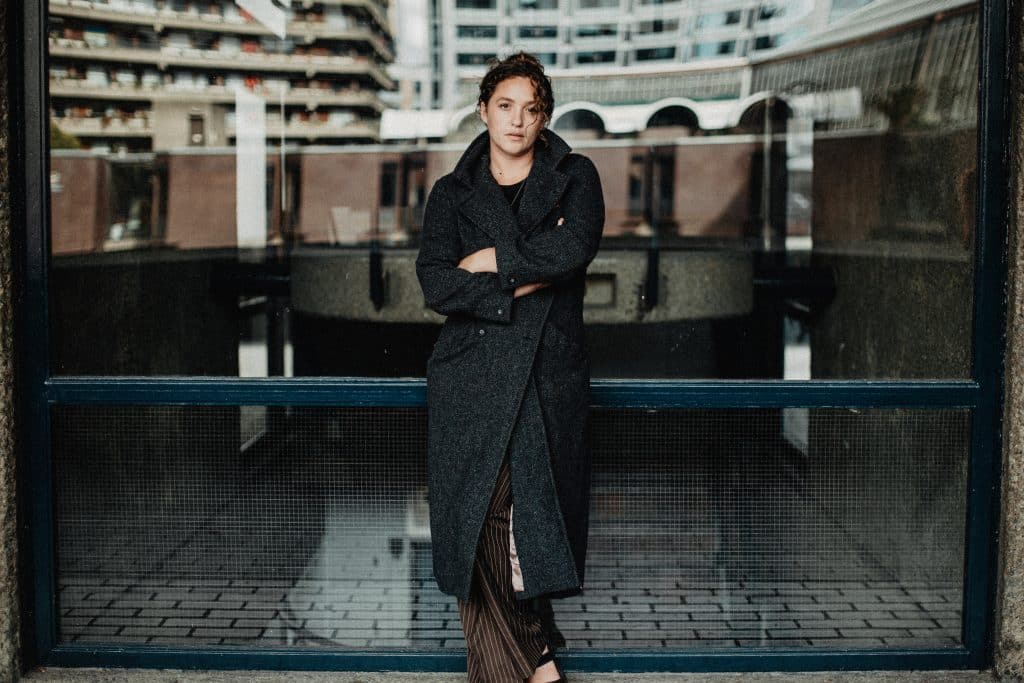
Terra – Meg Birley
You’ve said you’re drawn to stories with moral complexity and deep human connection—what sort of roles really get your heart racing?
For me, it always comes down to high stakes, intense pressure, and impossible choices. I’m deeply drawn to three distinct worlds that, on the surface, seem very different, but all share that same raw human heartbeat.
First, I love the claustrophobic, high-adrenaline energy of gritty contemporary dramas and modern warfare stories. Projects like Boiling Point, The Bear, Adolescence, Kin, Warfare or Ozark completely captivate me. I’m fascinated by characters pushed to the absolute brink—whether they’re navigating the criminal underworld, dealing with drugs and survival, family loyalty being pushed to the edge, life-or-death environment of a modern war drama like American Sniper. There is a psychological thrill in playing someone operating on the edge of a knife, where one wrong move changes everything.
On the flip side, I get that exact same rush from sci-fi, particularly space survival. I love the crucible of putting astronauts in isolation, facing a massive moral dilemma where they have to make an agonizing choice with lightyears of distance separating them from safety.
Fantasy
Finally, my actor’s brain absolutely lights up with fantasy. I love the grand scale of it, but also the sheer fun and character depth it allows. I’d jump at the chance to play a character exploring the reality of having magical powers—even the brilliant, everyday magic of using powers to navigate mundane daily tasks! But I’m also fascinated by the deep, complex dynamics you can find in immortal characters. Imagine playing a 500-year-old vampire who forms an unlikely, deeply rooted bond with a werewolf; that kind of history and hidden vulnerability is a goldmine to explore.
Ultimately, whether a character is surviving a crisis in deep space, navigating a dangerous street or combat zone, or wielding ancient magic, it’s that pressure-cooker environment and deep connection that gets my heart racing. I want to play people whose choices force the audience to look inward and ask, ‘What would I do?’“
Syrian roots
Coming from Syrian roots, do you find your background shapes the way you approach your characters or the stories you’re most passionate about?
To be completely honest, I didn’t grow up with my Syrian father—I only met him when I was 18—so I didn’t have that direct cultural upbringing shaping my perspective from an early age. But rather than closing a door, that separation actually created a deep, lifelong curiosity within me. It made me want to explore that heritage and the history of my father’s side through my work.
Because of that, I’m incredibly eager to delve into Middle Eastern stories and roles. In fact, it was a brilliant stroke of luck early on that led me to a casting call for a Middle Eastern character—a Kurdish role, specifically. I had to dive straight into the deep end, learning a general Middle Eastern accent and even lines of Kurdish.
That experience only fueled my fire. So while my background didn’t dictate my past, it definitely shapes my future aspirations. I would absolutely love to continue using my heritage to bring authentic, complex Middle Eastern characters to life, using acting as a way to connect with and honor that part of my roots
You didn’t go the traditional drama school route—what’s been the biggest challenge (or maybe secret advantage) of building your acting career independently?
Biggest Challenge
The biggest challenge is undoubtedly the unpredictability and the lack of a linear ladder. In a traditional career, you move from assistant, to supervisor, to manager. In acting—especially when you’re finding your own way in through the back door—there is no roadmap. You constantly have to try to read and predict the industry. One minute you’re busy and riding high on a lead, and the next, you might find yourself a year out from a high-quality project, working on a student film just to stay sharp.
There’s absolutely nothing wrong with student films, but when you’ve had the privilege of working on an incredible project like TERRA with Rory, it’s deeply humbling. It forces you to sit with those quiet moments and re-evaluate your life choices when you’re striving to land that next cinema- or TV-worthy project. Having TERRA under my belt now—especially with the four award nominations it’s received—is a massive anchor for me. It’s the proof that the hustle pays off, and it really keeps me going during the dry spells.
As for my secret advantage? Well, it’s not much of a secret anymore, but it’s working for free on the right passion projects. Early on, indie films and short projects where you work for expenses were everything to me. It is an unmatched way to flex your acting muscles, build a showreel, and network. I’ve met some of the most incredible, collaborative people on those sets—people I still work with today. When you don’t have a drama school showcase to hand you connections, you create them yourself on the ground, and that grit becomes your greatest superpower.”
Future
From gritty dramas to sci-fi and fantasy, is there a role you’re still dreaming of playing one day?
Honestly, there is so much I want to sink my teeth into, and so little time! But if I had to narrow down the ultimate dream roles, they fall into a few distinct, high-stakes categories.
First, on the gritty drama front, I’m dying to play someone from a raw, uncompromising UK background—whether that’s a struggling mother of six on a council estate, someone navigating the survival-driven world of a drug dealer, or a character trying to rebuild their life fresh out of prison. I’m fascinated by gritty, true-to-life stories because they demand absolute authenticity. For an actor, stripping away any pretense to play that kind of raw survival is the ultimate, humbling challenge.
Chess
On the complete flip side of that, I’d love to play someone incredibly sharp, polished, and put-together on the outside, but with a completely broken moral compass underneath. Think of a seemingly perfect professional who is secretly laundering money or hiding a dark, dangerous double life. The psychological chess match of playing someone who wears a flawless mask while doing awful things is just a goldmine.
When it comes to war dramas, that desire comes from a very personal place. I actually wanted to join the cadets when I was younger, and even tried to join the Army Reserves later on before an ankle injury sidelined me. Because of that, I have an immense fascination with the psychological bravery of soldiers. To be able to honor and depict that kind of profound mental and physical pressure on screen would mean the world to me.
And finally, my imagination completely runs wild with sci-fi and fantasy. I dream of playing a character like Matthew McConaughey’s in Interstellar or Sigourney Weaver’s Ripley in Alien—ordinary people carrying the weight of the universe on their shoulders in deep space. Or, in the fantasy realm, diving into worlds like Shadow and Bone or playing a fiercely complex creature like Cara Delevingne’s character in Carnival Row.
Ultimately, my dream isn’t just about one specific role; it’s about pushing myself to the absolute extremes of human experience.”
Outlander was your first taste of the industry—do you remember the moment you thought, “This is it, acting’s the thing for me”?
Outlander
Oh, absolutely. I can pinpoint the exact moments it happened. The first was the sheer, immersive scale of it. Walking onto the Outlander set—I think it was Season 2—wearing this incredible, heavy 17th-century ball gown, and another time playing a villager in a completely fabricated historical town they’d built up in Cumbernauld, Scotland. You are quite literally transported to another century. It felt like the ultimate form of ‘dress-up,’ and the inner child in me was completely captivated.
But the real turning point—the moment the deeper fire was lit—happened when I was standing just a few feet away from Sam Heughan (Jamie Fraser) and the director.
I was close enough to overhear this incredibly quiet, intimate conversation they were having right before a take. They were discussing the close-up, and Sam was explaining how he was only going to give about 80% on this specific pass to save the rest for the next angle. Watching that technical, psychological chess match happen in real-time was fascinating. It wasn’t just magic; it was a craft.
Standing there in my costume, listening to them dissect the scene, everything clicked. I thought, ‘That scenario right there. That conversation. I want that.’ That was the catalyst. As soon as I got home, I jumped straight into more acting classes, started hunting down short films, and began networking like crazy to build my own way or something gracefully muscle my way in!
Unexpected Job
You’ve juggled side hustles while building your career—what’s the funniest or most unexpected job you’ve had along the way?
Oh wow, that is a tricky one because I’ve literally had over 40 jobs! I honestly think I could write a comedy series based entirely on my resume at this point. I’ve done everything from assisting swim teachers to sports massage, folding jumpers at Superdry, working festivals, doing heavy lifting for removals, newborn baby photographer in hospitals, dressing wedding chairs, and working in care. You name it, I’ve probably done a shift in it!
But if I had to pick the highlights, the most unexpected was definitely a stint making luxury Christmas crackers for high-end retailers. My mum and I would drive down to a local warehouse, pick up all the raw materials and premium gifts, and assemble them together at our office table. I quickly realised I didn’t quite have the meticulous patience required for that level of craftsmanship, though my mum bravely carried it on for a bit!
Unexpected
The funniest job by far, though, was being a live host on the auction app Whatnot. I would go live for four hours straight, talking non-stop, selling the most wonderfully random items to absolute strangers, and then spend hours packing it all up afterward. It was exhausting, but looking back, it was actually the ultimate, accidental acting training—absolute pure improv, high energy, and dealing with whatever unexpected thing happened live on camera.
But the most interesting job by far was working at an auction house. I was completely taken aback by the sheer volume of history passing through the doors—beautiful vintage rugs, antique furniture—where every single item clearly had a rich story to tell. I absolutely loved it, and I was actually starting to train to be an auctioneer—yes, the ones who talk super fast!—before I ended up relocating.
If anything, having 40 different jobs hasn’t just paid the bills—it’s given me an endless library of human behavior to pull from for my characters!”
Terra is a big milestone for you. Looking back, what’s something you wish you could tell your younger self starting out in this business?
Younger Self
Looking back, there are two distinct pieces of advice I would give my younger self, and they both boil down to taking back your own power in an industry that can often make you feel powerless.
The first would be: start making your own films immediately. Finish writing that script, learn the camera gear, and understand the production side. When you know how to make your own work, you stop waiting around for permission or relying on someone else to cast you. You create your own opportunities and give yourself something tangible to talk about. I actually get a bit annoyed with myself because I did Media and Film Studies at A-Level—we literally had to create title sequences and learn camera work! If I had just kept that momentum going, I’d have a decade of filmmaking experience by now. I’d tell my younger self not to let those skills sit on a shelf.
The second piece of advice is something that actually only sunk in for me recently, after a reassuring voice note from a close friend: stop stressing about finding 100% ‘flexible’ gig work all the time.
Actors are notoriously known for being skint, but the endless anxiety of zero-hour contract side hustles can drain your creative tank. I’d tell myself to find a stable job I actually enjoy, with predictable hours that allow me to pay rent without panicking, afford a birthday present, or save for a holiday. At the end of the day, if you can’t occasionally request a shift off, or ultimately walk away from a job when your dream passion project finally comes calling, then what are you doing it for anyway? Take care of your life and your financial mental health first—the acting will thrive because of it.”