Schari Rahbari’s inspiring journey from a car repair shop in Germany to the stage highlights his unique path to acting success.

Schari Rahbari’s journey reminds us that the road to the stage is rarely straightforward, and that the best stories often begin in the most unexpected places.
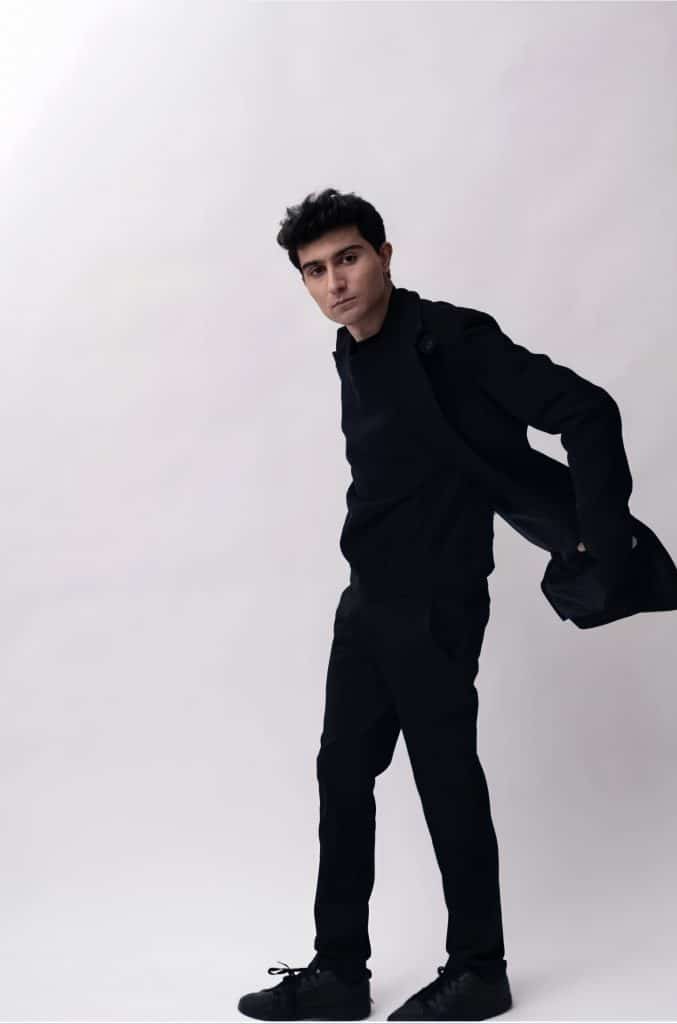
Every actor’s path is unique, but few have navigated a journey as diverse as Schari Rahbari’s. I love stories like these because they stand in stark contrast to the so-called ‘silver spoon’ actors, whose journeys are paved with privilege and predictability.
Schari’s path is refreshingly authentic—no shortcuts, no family connections, no easy breaks. Instead, his journey is marked by hard graft, real-world experience, and a genuine hunger to understand people. These kinds of stories remind us that the most compelling artists are often those who have lived, struggled, and found their own way to the stage, rather than simply inheriting it. If this journey resonates with you, then read on.
Bright Lights Big City
Born and raised in Germany to a Persian family, Schari’s story began far from the bright lights of New York City. His early days were spent in the family’s car repair shop—an unlikely training ground for an artist, perhaps, but one where resourcefulness and strength were not just encouraged, but necessary for daily survival.
It’s easy to imagine how the prospect of a future on stage might have seemed fanciful, if not impossible, to anyone watching from the outside. In such an environment, staying motivated to dream of a different life—one driven by art rather than mechanics—takes a rare kind of determination. Most people, confronted with the daily grind of manual labour and the weight of family expectations, would have dismissed any notion of acting as a pipe dream. Yet, it’s precisely this distance from the conventional path that makes Schari’s journey so compelling.
Schari Rahbari – Life Lessons
The workshop offered a firm grounding for relatable life lessons: meeting tight deadlines, thinking on your feet, and adapting to new challenges every day. Whether it was diagnosing a stubborn engine fault or dealing with a difficult customer, Schari was constantly learning how to find solutions under pressure. These formative experiences not only shaped his work ethic but also gave him a unique perspective on people, struggles, and what it means to keep going when the odds are stacked against you.
Turning Point
Schari’s move to New York marked a turning point. Inspired by his father and the courage it took to build a new life, Schari saw acting as a way to explore the complexities of identity and human connection. He immersed himself in the city’s vibrant creative scene, focusing his personal history into every role.
One of his most recent performances as Jørgen Tesman in Hedda Gabler stands out as a career highlight. This milestone deepened his belief that stories not only entertain but also encourage empathy and spark dialogue.
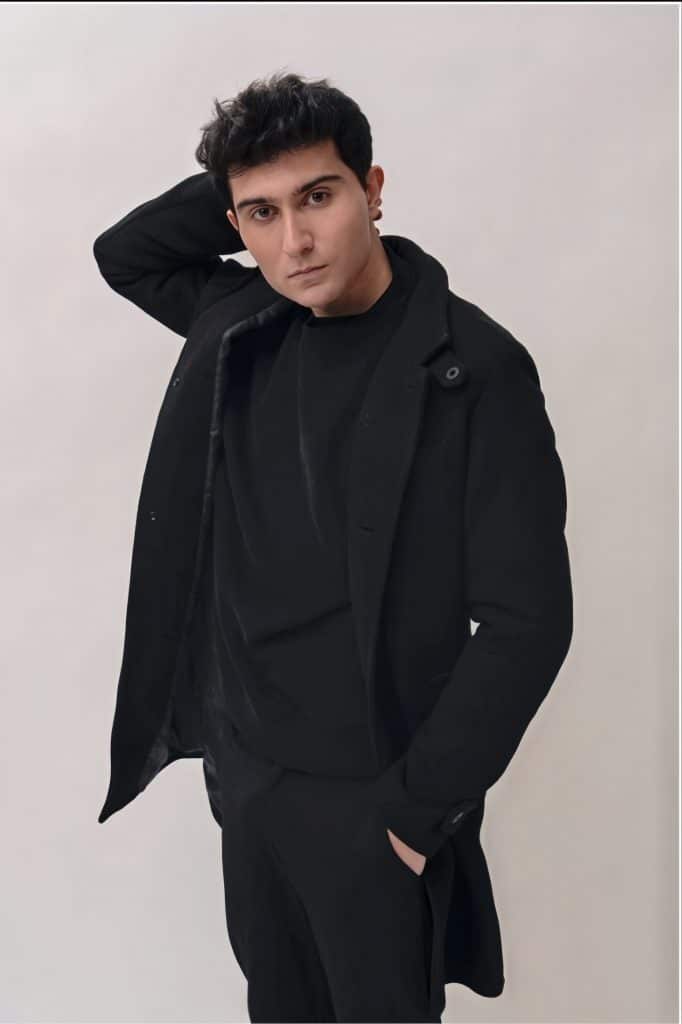
Schari Rahbari – Balance
While acting has firmly taken centre stage for Schari, it’s impossible to overlook the impressive — and, dare I say, rather distinguished — modelling portfolio he has developed along the way. Narrative is at the heart of both crafts, and Schari proves that being adaptable is a must in an industry that throws curveballs without warning. The crossover between acting and modelling is seamless in his case, echoing the very theme of this edition: there’s no need to pigeonhole creativity. Both pursuits sit side by side comfortably.
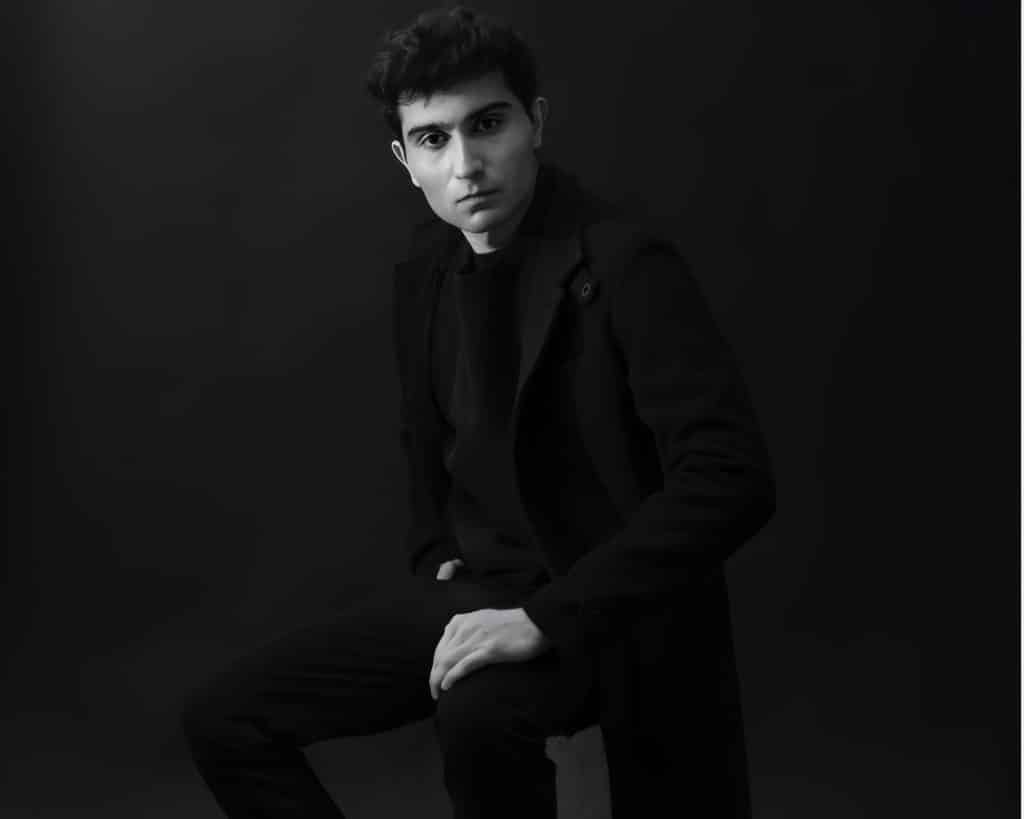
Schari Rahbari – Interview
Germany
Let’s start at the very beginning—can you tell us what it was like growing up in Germany as part of a Persian family, and how those roots have influenced your outlook on life and your approach to acting?
Growing up with Persian roots in Germany showed me, in a valuable way, what it means to be raised between different traditions, customs, and cultural influences. As a child, I did not fully recognise how deeply those influences were shaping me; although I occasionally encountered reactions ranging from curiosity to bias and prejudice, I only came to understand their significance as I grew older.
I began to realise how complex it can be to find your place in the world while seeing two cultures as equally integral parts of your identity, family, and sense of home. This growing awareness sparked a desire to learn more about my background and family origins, ultimately helping me better understand myself and develop a deeper appreciation for where I come from. It also taught me to empathise with others who have grown up between cultures or had to build a new life in an unfamiliar environment.
Multicultural Background
That experience continues to shape my outlook and my approach to acting. I believe our backgrounds reveal something about who we were, who we are, and who we might become, and that our individual stories can teach us a great deal about one another. In a world that can sometimes move too quickly to truly appreciate those differences, I see a multicultural background not as a dilemma but as an opportunity: an opportunity to develop a unique voice, challenge prejudice, and inspire others with similar experiences to embrace their own identities and take risks. For me, acting offers a particularly powerful way to do that—to give a voice to characters with complex backgrounds and perspectives, create space for people to recognise themselves in those stories, and perhaps open the door to greater understanding and change.
Schari Rahbari – Early Experiences
Many would say a car repair shop is worlds away from the stage—how did your early experiences in your family’s garage shape your work ethic or the way you approach a new role?
At first, I also believed that the work of an auto mechanic differed significantly from that of an actor on stage. Over time, however, I came to see that the two crafts are far more alike than one might initially suppose. Fundamentally, both are rooted in the principles of transformation. In chemistry, we see how elements interact and combine to form something new; in mechanics, the mechanic’s knowledge of physics comes together with ingenuity and creativity to restore or transform a machine.
Acting
Acting follows a similar principle: the actor’s cognitive and emotional understanding interacts with character, imagination, and craft to create something that did not exist in the same form before. To me, neither profession is simply about repairing something or telling a story. Both reflect a fundamental process found throughout nature and existence—a cycle that begins with growth, moves through decay, and ultimately leads to transformation. My time in our family-run auto repair shop reinforced this understanding. From childhood until I began my university studies, I was surrounded by people from remarkably different backgrounds and circumstances. I heard stories of achievement and hardship, joy and regret, love and loss, and gradually realized that the workshop was not only a place where cars were repaired, but a place where life itself unfolded.
That experience continues to shape the way I approach acting. The workshop taught me that no person is defined solely by what appears on the surface; we are shaped by our past, our circumstances, and the choices we make, constantly changing along the way. In that sense, we all hold the wrench in our own hands: we have the ability to repair, redirect, and reshape parts of our lives, even though perfection is impossible and change is inevitable.
When I approach a new character, I therefore try to look beyond what is immediately visible and discover the history, contradictions, hopes, fears, and experiences that have shaped them. The qualities I developed through mechanics and acting ultimately converge within me, allowing me to approach character and relationships from a more fundamental perspective. I am not simply trying to portray how a character appears, but to understand how they came to exist, how they are shaped by the forces around them, and how they might continue to transform.

Schari Rahbari – The Spark
People often imagine a life in the arts begins with drama schools and spotlight moments, but your path was anything but typical. Schari, what gave you the spark to pursue acting, and how did you keep that fire alive through the years?
The spark to dedicate my life to acting was by no means a long-settled decision. Rather, it was the result of a long, unconscious process—a collection of experiences and realisations throughout my youth that gradually converged and ultimately gave me the courage to enter a field with which I had previously had no real contact. The pivotal inspiration came above all from my father’s story.
Father’s Story
In 1957, decades before I would make a leap of my own, he made the courageous decision to leave his family home in his native country and begin a new life in Germany. His journey taught me that finding your own path often requires the courage to leave the familiar behind and embrace uncertainty. After graduating from high school, I spent time helping my parents in our family-run auto repair shop. Being there gave me the opportunity to step away from the structure of school, work with my hands, and reflect on what I wanted my own future to look like. While many people my age were moving toward more conventional paths, I found myself asking a different question—not simply what career I wanted, but how I wanted to live and what I wanted to contribute to others.
Family Bond
Although I have always maintained a strong bond with my family and deeply valued my heritage, I felt that I needed to discover a path of my own and understand who I could become beyond the expectations and circumstances that had shaped me. Acting emerged almost instinctively as something completely outside the world I already knew. I had no experience in the field, and the thought of pursuing it in another country, particularly in New York, made the decision even more uncertain. Yet that uncertainty was precisely what drew me toward it.
At a certain point, I had to ask myself whether I wanted to simply follow what was expected of me or have the courage to explore who I could become. In that sense, my father’s journey became a kind of compass—not a path for me to repeat, but an example of what can happen when you are willing to leave the familiar behind. I chose to take that leap into the unknown, and acting has since become much more than a profession. It has become a continuation of that same process of discovery: an opportunity to grow, take risks, make mistakes, form meaningful connections, and continually discover new perspectives and new aspects of myself. The journey remains unpredictable, but that uncertainty is precisely what gives it meaning—and reminds me of what it means to be human.
Schari Rahbari – New York
Schari, moving to New York is no small feat. What was going through your mind when you took that leap, and were there moments when you doubted if you’d made the right choice?
I embarked on this journey with immense pride and dedication, eager—like generations before me—to reach another milestone, summon the courage and willingness to take risks, and pursue my own goals, dreams, and lessons, all in the hope of emerging more mature than before. At the same time, I felt a deep sense of awe and trepidation in the face of such a fundamental change. It would be dishonest of me to deny having doubts; moving from the quiet, peaceful city of my hometown, Kiel, Germany, to one of the world’s largest metropolises was a massive adjustment, especially without knowing what lay ahead or how the city might shape me over time. I knew that taking this step meant leaving behind a familiar environment and deliberately placing myself in circumstances where I would have to adapt, learn, and perhaps discover aspects of myself I had never encountered before.
The Journey
Even now, there are moments when doubts creep in, and I question the nature of the journey—or the path—that fate, or God, has set before me, and what its ultimate purpose might be. I have wondered whether, after enough time has passed, I will remain the same person I was before leaving, or whether my experiences with the people and the city will fundamentally change my perspective and mindset.
I have also found myself reflecting on what it truly means to become part of another culture, what it means to be American, and how the differences between American and European culture might shape the way I understand myself and the world around me. Yet despite these uncertainties, I remind myself that this is precisely what makes the journey meaningful. I chose to come here not because I knew exactly what would happen, but because I was willing to find out. For me, the most important thing is to approach the experience with an open mind, allow myself to be captivated by it, and remain receptive to whatever it may teach me.
Schari Rahbari – Hedda Gabler
Your performance as Jørgen Tesman in Hedda Gabler has been singled out as a highlight. What did that role teach you, and did it change the way you view yourself as an actor?
I was deeply honoured to play Jørgen Tesman in Patrick Marber’s adaptation of Henrik Ibsen’s Hedda Gabler. The role offered me the opportunity to expand my range as an actor and explore facets of the craft I had not previously encountered in quite this way. What fascinated me most was Tesman’s complexity: on the surface, he appears to be a hardworking, devoted family man and a level-headed academic, yet beneath that exterior are naivety, ambition, vulnerability, and a capacity for morally questionable choices. His idealized understanding of life often blinds him to the reality surrounding him, and as the circumstances unfold, his emotions shift dramatically. Act 4 was particularly meaningful to me because Tesman moves in rapid succession through grief, anger, and immense happiness. Portraying those transitions required me to find emotional depth within myself while remaining truthful to the character.
External Qualities
Ultimately, the role taught me that understanding a character goes far beyond portraying what is visible on the surface. Every person—and therefore every character—carries contradictions, desires, fears, experiences, and a history that shape how they move through the world. Tesman challenged me to look beneath those external qualities and discover the human being within them. In that sense, the role changed the way I view myself as an actor: I became more conscious of my ability to draw from my own inner experiences while still allowing a character to develop its own identity. Jørgen Tesman challenged and tested me both as an actor and as a person, and in retrospect, I feel that I reached a new level in both respects. I now approach each new character with an even greater curiosity about the human condition and the transformations that make us who we are.
Schari Rahbari – Modelling and Acting
What’s been the most surprising thing about juggling both modelling and acting? Any funny or unexpected moments you can share?
In fact, acting and modelling have held some unexpected moments in store so far. Both as an ensemble and on a personal level, we have encountered moments that were deeply memorable and inspiring. Every now and then, we could allow ourselves to be completely silly and relaxed, which would break the tension in the room and allow us to share a laugh together.
Particularly during certain scenes or modelling sessions, that freedom allowed us to be ourselves and get to know one another better. What surprised me most was how much this openness could influence the creative process. I realized that my curiosity and willingness to experiment on set or during photo shoots could unleash my creativity and lead me to make choices—both mentally and physically—that I might not otherwise have made. Some of those choices surprised me, while others taught me something I had not expected to learn.
I think that is what I have found most surprising about working in both fields: the moments that seem spontaneous, imperfect, or even silly can sometimes lead to the most meaningful discoveries. They taught me that creativity often begins when we allow ourselves to step outside what feels familiar and remain open to what might emerge. In many ways, that realisation became part of the philosophy behind “Style Meets Strength”—embracing who we are, remaining curious about what lies beyond the familiar, and having the courage to discover what we are capable of becoming.
Schari Rahbari – Inspiration
How do you find inspiration for your roles and photo shoots? Do you have any go-to sources or rituals that help you get in the zone?
One of my key strengths as an actor is my affinity for improvisation. When a scene allows for it, I enjoy making bold and unexpected choices that bring spontaneity and authenticity to a character. My training in different acting techniques, particularly the work of Sanford Meisner and Lee Strasberg, has strongly influenced this approach.
Meisner taught me the importance of truly listening and responding to what is happening in the moment, while Strasberg encouraged me to explore emotional truth and personal experience. I do not see these methods as rigid formulas, but as tools that help me remain present, instinctive, and truthful. I bring that same openness to photo shoots, allowing the environment, photographer, styling, and unexpected moments to influence my choices rather than having every movement predetermined. Sometimes the smallest spontaneous decision can completely change the energy of an image, and those moments often lead to the most interesting discoveries.
Dramatic Literature
Beyond technique, one of my greatest sources of inspiration is dramatic literature and the way great writers explore human life. Shakespeare taught me about relationships, ambition, love, power, and tragedy; Samuel Beckett opened my eyes to uncertainty, meaning, and the contradictions of existence; August Wilson revealed the connection between identity, community, and history; and Tony Kushner, particularly through Angels in America, showed me the relationship between social change, responsibility, and hope.
Their work connected deeply with what I experienced growing up in our family workshop, where I encountered people from different backgrounds and listened to their stories. Literature helped me recognise the recurring patterns in human behaviour and the ways our experiences, relationships, and circumstances shape who we become. So, when I prepare for a role or a photo shoot, I do not follow one fixed ritual. I observe, listen, draw from what I have learned, and remain curious and willing to experiment. Ultimately, my greatest source of inspiration is life itself—the people I encounter, the stories I hear, and the endless ways in which human beings reveal who they are.
Schari Rahbari – Keeping Grounded
Outside of acting, what passions or hobbies keep you grounded and inspired, especially when the industry gets a bit overwhelming?
Right now, I find myself particularly passionate about slowing down and engaging more consciously with my surroundings. Living in a fast-paced city like New York, I make a point of spending time in parks, reading, and simply observing everyday life. I am especially interested in the people and communities that give the city its character, from neighbourhoods like Chinatown to the South Bronx. I find it fascinating how many “unsung heroes” there are in everyday life—people who quietly contribute to keeping their communities and the city moving. In many ways, this reminds me of my time working as a mechanic, where I had the opportunity to meet people from very different backgrounds and hear their stories.
Beyond that, I am drawn to reflecting on history and human behaviour—how our experiences shape who we are and how the past continues to influence the present. These interests help me remain grounded, curious, and attentive to the world around me. I think that is especially important when working in a creative field: stepping away from acting allows me to observe life rather than constantly trying to interpret it. Sometimes, simply slowing down, listening, and paying attention can be just as inspiring as being on a stage or set. Ultimately, I find that the more consciously I experience the world around me, the more I have to draw from when I return to my work.
Schari Rahbari – Advice
For anyone reading who’s dreaming of breaking into acting from an unconventional background, what’s the one piece of advice you wish someone had given you when you first started out?
One piece of advice I wish I had received at the very beginning is this: never lose faith in your own voice, especially when the world around you tries to convince you that it is not worth hearing. Before I began working as an actor, I had a somewhat nostalgic and idealised view of the world of art, shaped by films such as Forrest Gump—films that moved me deeply and made me see the world through fresh eyes. I believed acting was fundamentally about telling stories that could move people, challenge perspectives, create empathy, and perhaps allow someone to recognise something of themselves in a character.
Over time, I realised that the world of art is constantly evolving, and that this evolution does not always align with one’s original vision. I do not necessarily see that as negative; art, like human beings, thrives through transformation. What matters to me is preserving the relationship between the actor and the craft itself. An actor’s voice carries a responsibility—to entertain, but also to challenge, comfort, provoke thought, and offer people another way of seeing themselves or the world. There will always be pressure to conform, compare yourself to others, or question whether your individual approach is worth pursuing. But I have learned that setting yourself apart can be precisely where meaningful growth begins.
Making A Difference
My own unconventional background reinforced that belief. Working in my family’s auto repair shop, helping others during my time as a Scout, and listening to the stories of people around me taught me that even seemingly small actions can have meaning and that our experiences can become part of what makes our voice unique. A quote from Václav Havel has stayed with me: “The moment someone breaks through in one place, when one person cries out, ‘The emperor is naked!’ … everything suddenly appears in another light.” To me, that is a reminder that one person does not have to be powerful to make a difference.
There will always be people who criticise, belittle, or tell you that you have nothing meaningful to contribute, but their judgment does not determine your worth. So, for anyone entering the world of art from an unconventional background, my advice would be simple: find your own voice, protect it, and have the courage to use it. Do not be afraid to take risks simply because your path looks different from someone else’s. Your background, experiences, and even the obstacles you encounter can become part of what gives your voice meaning. Ultimately, having a voice comes with a responsibility—not simply to be heard, but to have the courage to say something that matters.
Credits
Website editorial photography by: Ramathillai Photography – @ramathillai.photo
Schari Rahbari – Instagram – Linkedin – Website
Acting Reel link.
Contact the magazine.
Support us with a follow and a like on Spotify.